
The Vietnam War Footlocker That Survived a Hurricane — And the Classified Battery Trick Hidden Inside
After Hurricane Helene destroyed his home in 2024, North Carolina football coach Christopher Riggs discovered his late father's Vietnam War footlocker in his flooded basement. What was inside has now reportedly helped over 42,000 American families generate their own electricity — and the battery industry isn't pleased.
Christopher Riggs didn't set out to be a viral story. The 45-year-old high school football coach from Chimney Rock, North Carolina, was a man whose life had already been knocked sideways twice — first when his job at North Carolina's largest semiconductor plant was sold overseas, and then when Hurricane Helene tore the roof off his home in September 2024.
What started as a forecast for "above-average winds and a little extra rain" became one of the worst disasters in the region's history. By the time it was over, Riggs's family was eating from cans, his daughter had a piece of twisted steel in her leg, and his $3,000 backup generator was sitting under two feet of mud.
FEMA never came.
For seven weeks, the family lived without power. The wood stove kept them warm during the day. At night, they went to bed in the dark.
Then, in late October, a second flood crept into Riggs's basement.
That's when he found his father's footlocker.
"I hadn't opened that thing since my twenties. My dad died from Agent Orange when I was three. The footlocker was just about all I had left of him." — Christopher Riggs
A Classified Operation From a War Half a Century Ago
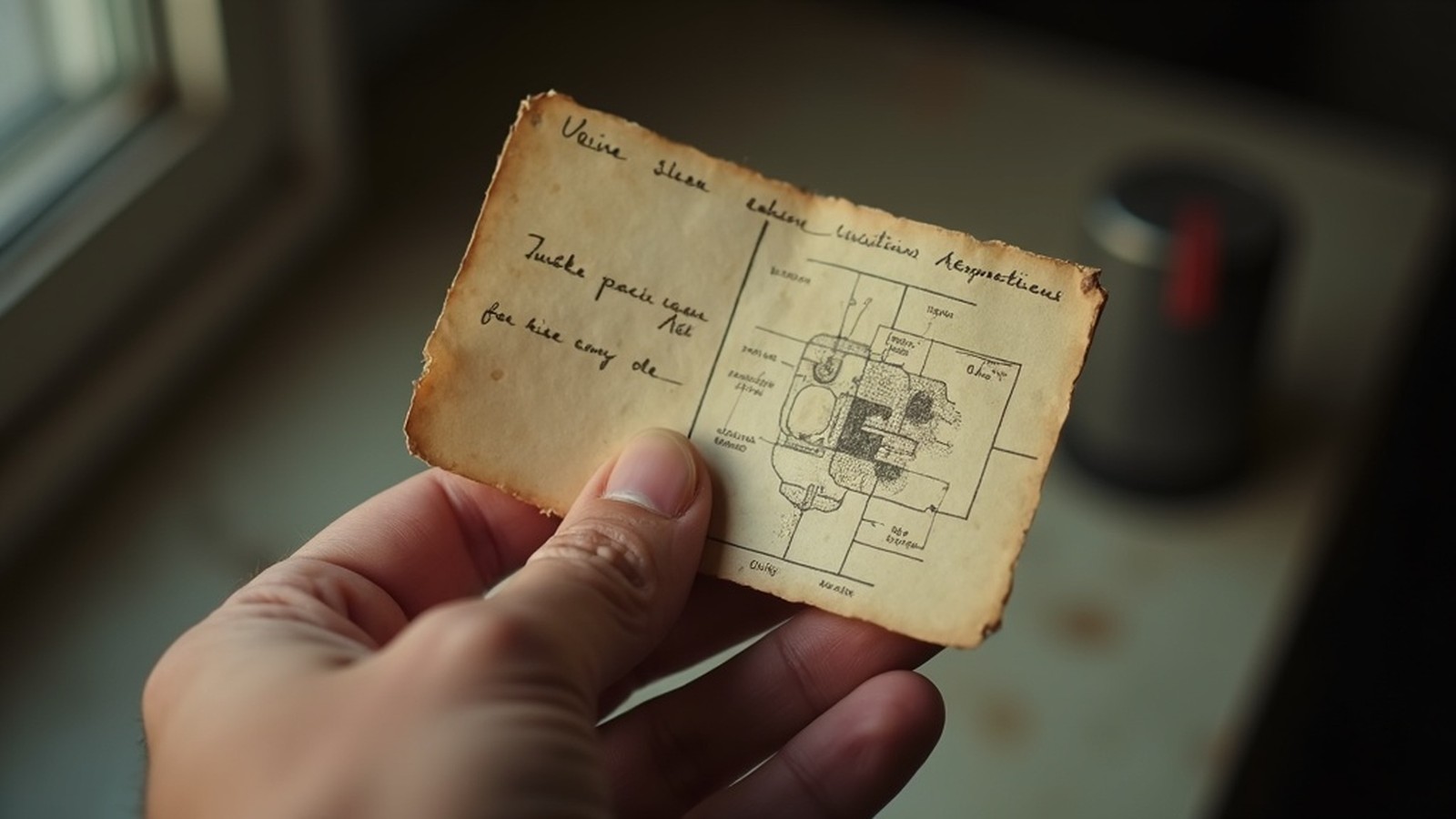
Underneath the faded photographs and old postcards was a tattered file folder. Inside the folder: documentation that Riggs's late father had been a member of something called Operation Phoenix-Watt — a Vietnam War-era unit assembled in 1967 to solve a critical problem.
American military vehicles were failing in the Vietnamese jungle. The humidity, the swamps, the constant exposure had killed thousands of batteries — leaving jeeps abandoned, men stranded, and weapons silent. Worse: the Viet Cong were salvaging the abandoned American jeeps and using them against U.S. troops.
President Nixon's response was unusual. He authorized a classified program in which battery companies were ordered to hand over their proprietary trade secrets to a small unit of "blue-collar boys back home" — soldiers selected for their resourcefulness rather than their formal training. Their job: distill those trade secrets into a battlefield process that any soldier could perform with limited tools.
The Phoenix-Watt unit succeeded. Within a single year, vehicle abandonment rates dropped 78%. Batteries thought to be permanently dead — corroded, cracked, even shot through with bullets — were being restored to full working condition by lone soldiers behind enemy lines.
But the unit also discovered something else. They found a way to chain those revived batteries together to create portable power hubs capable of running radios, fans, signal jammers, even searchlights and quad-mounted miniguns during the defense of Firebase Ripcord in 1970.
They called it watt stacking.
When the Phoenix-Watt soldiers came home in 1973, they weren't given medals. They were given a gag order. According to documents Riggs found in the footlocker, the men were sworn to silence — reportedly as part of a deal between the U.S. government and the battery companies whose trade secrets had been pried open during the war. The Phoenix-Watt method was buried.
It stayed buried for 51 years.
See how Christopher Riggs explains the full method here. Watch his presentation →
What Happened When Riggs Tried It
According to Riggs's own account, he sat at his kitchen table the night he found the footlocker and worked through his father's notes by candlelight. His background as a semiconductor technician meant he could read schematics and follow process documentation. But he was struck by how simple the actual sequence was.
Battery technology had advanced since the 1960s. Several of the steps his father's unit had to perform were no longer necessary. Riggs simplified, merged, and removed steps. He gathered materials — most of which he already had in his garage.
His first test was on an old corroded car battery from his shed.
"The needle on the meter jumped up and bounced into perfect position. This battery hadn't taken a charge in over a decade, and it was now back to 100% working condition." — Christopher Riggs
Riggs grabbed an electric heater from the garage, used the watt-stacking method from the back of one of his father's laminated cards to wire the battery directly into it, and brought heat into the room where his daughters slept for the first time in seven weeks.
By sunrise, he had restored:
- 2 car batteries
- 3 lithium-ion power tool batteries
- 1 ATV battery
- A stack of AAs, Cs, and Ds from a junk drawer
- An old laptop battery
Each one fully recharged.
The Story Spread
Within hours, Riggs had printed simplified instructions and shared them with neighbors who'd lost power. By noon, the Blue Ridge Mountains echoed with the hum of chainsaws, generators, and power tools — all running off batteries that had been dead the day before.
The McCluskeys charged every cell phone on the block off an old dirt bike battery. The Boyds ran their washing machine using a cell salvaged from a Ford F-150. The Clarks cooked dinner for everyone in their oven, powered by a deep-cycle marine battery.
The local paper picked up the story. Then someone uploaded a video.
According to Riggs, what followed was unprecedented. Over the next eight months, 42,580 American families reportedly used the simplified Phoenix-Watt process — what Riggs has rebranded as "Last Battery" — to refurbish nearly 250,000 dead batteries. The combined verified savings have crossed $3.2 million.
Some used the method to cut their electric bills. Others, like Reed McCoy of Ohio, started small side businesses refurbishing and reselling car batteries to local mechanics — McCoy reportedly nets around $800 per month. Carl Treanor in Phoenix powers his entire home off restored car batteries in 110-degree weather. The Harpers in the Midwest eliminated their electric bill entirely.
And the battery industry has noticed. According to Riggs, his publishing operation has now received 22 cease-and-desist letters from companies he won't name publicly. The video walking through his method has been pulled from at least two platforms. He keeps reposting it.
"They don't want this floating around. Every battery somebody brings back to life is one battery they don't get to sell. There's real money in that for them." — Christopher Riggs
What's In the Video
Riggs has compiled the full method into a free video presentation. According to people who have watched it, the presentation walks through:
- Why batteries that appear "dead" usually aren't, and the simple process that brings them back
- The watt-stacking method developed during Operation Phoenix-Watt and how to apply it at home
- The specific household materials needed (most viewers report having everything they need already)
- How to chain restored batteries into a power bank capable of running essential appliances during outages
- Why the major battery companies don't want this method to spread
The presentation is currently available without cost. Riggs has not said how long it will remain online.